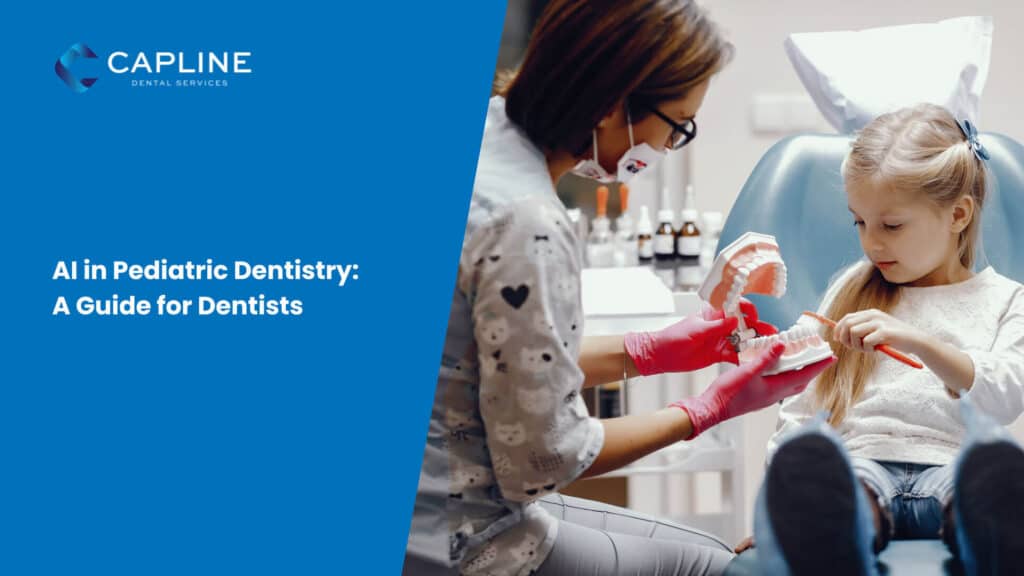
AI in pediatric dentistry is a progress towards precise diagnoses of the illness. Each one feels a
range of emotions from curiosity to anxiety and excitement when taking their child to the dentist. There are many advantages to AI technology in diagnosing illnesses. Many parents have the impression that the use of artificial intelligence is reducing the need for pediatric dentists. It is known that there is a need to take care of children as they grow up.
The use of artificial intelligence in children’s dentistry is all about personalized care. This encourages nervous children to attend their first dental visit. As technology continues to evolve, there is a need for practices to utilize tools for diagnosis and treatment.
The article explores artificial intelligence and its impact on practices. The truth is, AI can assist, but it is up to the practice how they utilize the technology so that every child receives a customized experience. The balance between precise diagnosis and administrative duties can offer considerable benefits to outpace the competition.
All of this makes the process smooth and not scary for both parents and young patients. The success of pediatric dentistry lies in establishing the confidence of the child and parents in the practitioner.
To detect decay in children aged 4 and up is easy to miss. Unnoticed tooth decay is not an easy situation to tackle. It can cause a number of oral problems. The identification of the problem is relatively simple, but treatment takes knowledge. Make sure to show patients what you see through color coding in your applications.
The black-and-white X-rays are now colorful, which brings understanding for parents and improves your case acceptance by 20-25 percent. According to the Journal of Dental Research 2024, the accuracy of AI models for diagnosis ranges between 94-97 percent.
In AI for pediatric dentistry, all necessary data for treatment requirements is used. A large-scale dental practice with hundreds or thousands of patients cannot process so much information.
Some applications will deliver AI dashboards that present the child’s images and relevant data along with the proposed treatment in a single view for your team to prep further. A dashboard can notify you about upcoming sealants and any caries to reevaluate based on PMS data.
Capline Dental Services provides an end-to-end RCM service solution enabled by AI for dental practices of any size in the USA. Reach out on the website or schedule a call with an expert.
The applications of AI include dental caries, root fractures, stem cell viability, periapical lesions,
and root canal morphology. It is expected that treatment will improve with faster and more precise diagnosis.
The problem of dental caries is common among children. Early diagnosis ensures that tissues are saved through minimal intervention. AI proves its efficiency in pediatric dentistry diagnostics. Thus, detects the earliest signs of caries.
AI cannot take the place of a dentist. It can only help detect decay or other problems. It is the dentist who makes the final diagnosis. Nonetheless, the dentist can verify the results of AI analysis.
Indeed, training is required when implementing AI in pediatric dentistry owing to the upfront costs and training involved. ROI can be observed in the success rate and patient satisfaction. As long as technological advances are continuous, that remains a competitive advantage.
Toothbrushes controlled by AI, augmented reality learning programs, robots performing treatment procedures, and teledentistry via AI.