Dental Insurance Termination: One day it was active; the next day it wasn't.
Dental insurance termination is a structural gap that happens between verification and the actual dental visit, creating a gap across a month boundary.
The question is: after a patient is verified as active, how can dental insurance termination happen midway? The problem is real because neither the practice nor the patient knows why, and the claim will not be paid.
The front desk had the confirmation for the patient’s second visit two weeks ago and verified a week ago that coverage was active. When the appointment was around the corner, the dental insurance terminated mid-month.
This is not a system glitch; rather, the earlier verification was accurate. What really happened was that the coverage ended at the end of the calendar month, and that’s where everything changed. The question is not whether the vendor has given them the bad data, because that’s how it looks.
The article here explains the calendar-month termination mechanism and how to deal with it.
What it is: Dental insurance termination is when there is no active coverage for the patient at the end of the calendar month, despite the confirmation.
Qualifying data for insurance termination: Layoffs, COBRA, and changes in the plan trigger the mid-treatment insurance termination.
This is how it works: Practices have to check again to make sure patients who come back are still good to go for the month if something has changed and if it has been 30 days since they last checked them.
Capline Services does things a little differently: We use AI-powered tools, simple onboarding, and fit your needs.
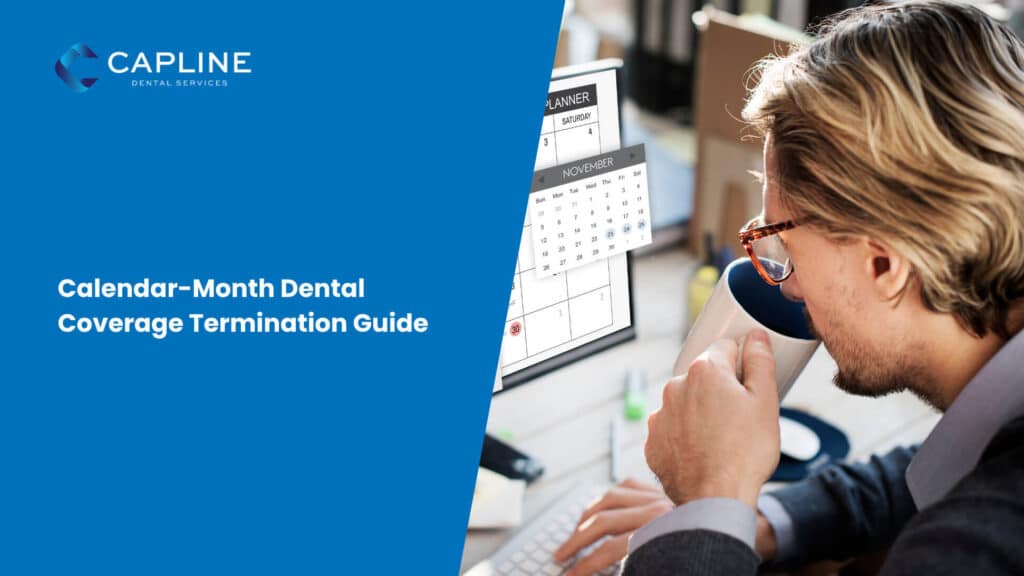
A dental insurance termination cancels the patient's coverage mid-month, regardless of what was active before. Most dental plans target the last day of the month, with zero coverage the next month. A verification problem is not a data problem; rather, it is just a timing problem with no stale records or technical issues.
Here’s an opinionated stance: the qualifying event usually occurs on the last day of the month, and the employer’s HR system updates the patient’s eligibility accordingly, including the plan termination date.
If an employee is terminated on September 21, they are covered until the end of the month. For the verification done on September 27, the plan remains active. This patient has a scheduled appointment on October 3, with coverage ending at the same practice on October 1. That gap will result in the claim being denied.
There is no way to know if the appointment was confirmed on the October 27 verification to flag the gap for the upcoming appointment. That separation is worth questioning.
The controlling factors are the reasons the calendar-month termination populates, which is a risk for the patient and the practice.
Employment termination is the qualifying event for the insurance termination, which typically lasts until the last day of the month. This means the employer has already notified the insurer of the termination, while the patient still believes they have the same privileges.
When the COBRA period expires, it creates a similar gap. A few patients elect COBRA after the job change, and missing a payment can often terminate the coverage.
Switching between the dental carriers can result in the same outcome. Practices have to schedule their patients very neatly so they are not working in the gap.
The same pattern is there if a child is off a parent's plan, or a divorce can change everything in the coverage.
The recurring exposure makes patients uncomfortable; they are exposed, and the worst is not knowing the exact date of their coverage expiration. It makes it difficult to coordinate with their dental appointments. What was wrong was that the month ended, and the clean verification became a denied claim.
There is another way to work with this. The common triggers are: a 30-day gap since the last verification, calendar month changes, and a reported change.
Is the qualifying event for the mid-treatment termination. Regardless of where they are in the calendar month, re-verify before their next appointment. It is not complicated; what makes it difficult is checking for active coverage every time for multi-visit patients.
Solution: That's where real-time dental eligibility verification fits in, shared by the payer to confirm the effective date of termination. This documentation matters as protection against disputes.
Requires re-verifying the patient on the first day of the next month. The effective changes that happened at the prior month-end are the opening or closing boundary.
Solution: Re-verification during the transition period confirms coverage. In case of changes, inform them about the expiration. As it is a non-covered service, patient pay will not surprise or negatively impact the doctor-patient relationship.
Such as a job transition, a new plan update, or a new insurance card. Their announcement is to re-verify patient details during a scheduling call.
Solution: Patients get confused about the COBRA election window. It is a time to elect retroactive coverage from the termination date.
If you are comparing different vendors for your practice or organization, here are some points worth considering and what you will get:
Before signing, get a free revenue checkup that identifies claim denial patterns, AR days assessment, eligibility gaps, pre-authorization gaps, payer performance review, and an actionable roadmap to improve cash flow.
Get your free audit today and start with no long-term contract.
The answer is to re-verify all patients with multi-visit, especially orthodontic patients, at the start of each calendar month. If patient verification is more than 30 days old, re-verify. Monthly re-verification can catch up with mid-treatment termination before it hits the claim. This extends the radius for patients who report a job change or plan change.
Yes, in most cases, if the employer-sponsored dental plan offers a 60-day COBRA election window from the date of the qualifying event or from the date the COBRA notice is received. Coverage is retroactive.