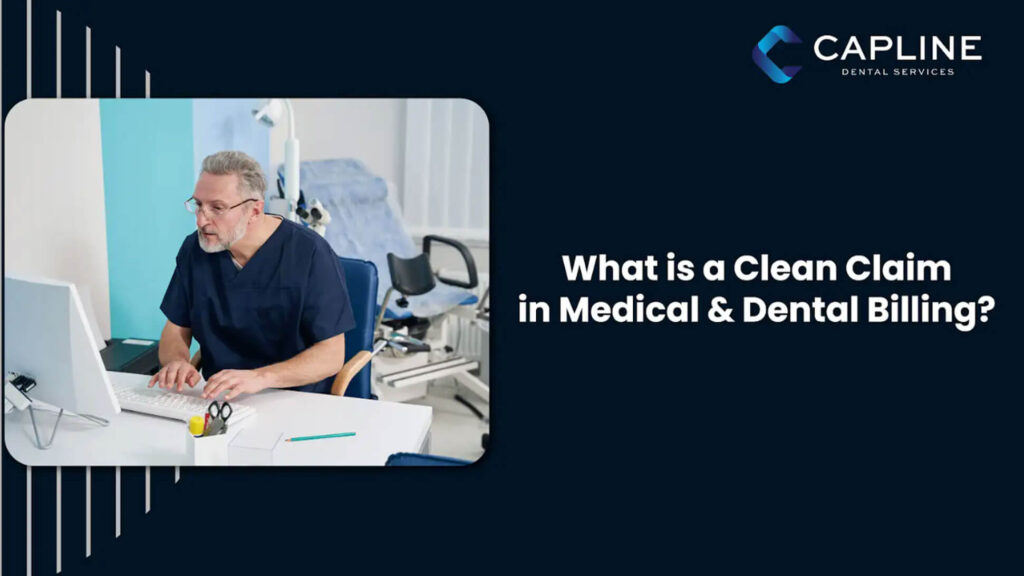
In the world of medical and dental billing, every practice works around what is a clean claim. Clean claims serve as a defense against lost profits. Clean claims and dirty claims are more than a metric for the involved parties.
Dirty claims contain errors or inaccurate submissions, resulting in staff burden, delayed payments, and frustrated patients. Risk of denials and payment delays can only be minimized through clean claims. With a clean claim, the practice can boost revenue and achieve claim efficiency.
Correct claim submission is considered a clean claim in the dental world. Submitting a clean claim is more than just meeting obligations. Rather, it ensures the details are accurate and complete, so that nothing holds up the claim from getting paid. Here is what makes that happen.
According to HFMA (Healthcare Financial Management Association), a clean claim rate of 95% or above is excellent. The percentage of claims submitted and approved without resubmission is the clean claim rate. The American Dental Association backed up the report, saying that the average clean claim rate is 92 percent. If the practice uses electronic claims and robust documentation, the number can spike to 96 percent.
Correct Codes with Documentation- All procedures are in accordance with the revised CDT codes to avoid outdated coding that results in denials and delayed payments. Clinical documentation includes a service billed with a detailed narrative explaining the need.
Complete records with specific attachments- Some dental procedures require further information with chart notes, x-rays, narratives, and perio charting. Attaching these documents can expedite the processing.
Following insurance plan guidelines- Every patient has a unique plan, and many have multiple insurance plans. Understanding the primary and secondary plans is critical. Incorrect coordination of benefits can result in the complete refusal of payments to the wrong payer.
Complete beneficiary information- Misspelled names and wrong birth dates can cause unnecessary rejections. Something as simple as recording patient demographics and insurance details can affect the revenue cycle. The matching data with the carrier file is the key to successful claims. Clean claims require no follow-ups from payers, resulting in faster payments and consistent cash flows.
Resubmissions will also help to receive reimbursement, but it would take extra staff time and resources. A busy dental practice wants more time for patient care, and submitting a clean claim is one step toward professionalism. Every hour that is utilised for patient care matters.
On the contrary, dirty claims increase delays and denials, keeping the team away from delivering service. They are not just bothersome but are costly. One of the biggest pet peeves for dental professionals is poor patient service. The time-consuming resubmissions and uncalled denials keep the team busy with communications. It curtails patients' access to services and drains productivity. Adding cash flow interruption and unexpected bills for patients.
The ADA reports that dental practices experience a dirty claim rate (claims rejected or denied on first submission) of 4% and 8%. The reason is as simple as missing documentation and incorrect coding, which requires additional administrative time and resources for rework. According to the Journal of Healthcare Information Management, the dirty claim costs are $25.
Successful dental practices don’t rely on fluke but rather follow consistent patterns of proactive habits that result in quicker insurance reimbursements. Let’s discuss what’s different about them that reduces denials and speeds up payments.
High-performing dental practices submit their claims within 24 hours of treatment. Logically, prompt submission reduces the chance of missing deadlines that keep the revenue flow. The up-to- date documentation is less likely to be questioned.
Another is patient eligibility verification, every time a patient visits the clinic. It ensures there is no mismatch. Active coverage, insurance plans, and beneficiary details are likely to change.
A dental practice with a well-trained team prevents errors early. There is a lot to understand in the coverage rules, nuances of deductibles, waiting periods, exclusions, and plan limitations. The insurance workflows require regular training to avoid claim rejections.
Documentation such as x-rays, perio charting, clinical notes, and narratives is a mandate with accompanying claims. Complete documentation maintenance is a process that keeps the workflow smooth.
Identifying trends to track denials due to coding errors, missing attachments, and payer requirements, to fix them before, and improve the future claim success rate.
Claim denials can be avoided to some extent in the future. The critical part is incorrect patient information. It is simple, yet it can cause delays in claim processing and reimbursement.
Incorrect COB errors are common with patients having dual coverage. Submitting the claim to the correct carrier helps with quick processing times and claim approvals at the first submission.
Expensive or complex procedures mandate pre-authorizations before treatment. The advanced document submission justifies the dental or medical necessity of the procedure.
ADA updates its code annually, and the use of outdated or deleted code leads to increased claim rejections or resubmissions, resulting in maximum revenue leakage. With the right strategy, the practice can streamline workflow and get paid faster.
Insurance companies depend on clinical narratives to verify the necessity of the treatment. Generic or less descriptive narratives can raise questions leading to resubmissions or claim denials.
Working with Capline Dental Services can be an advantage to get paid quickly. The experts streamline the practice revenue cycle by submitting clean claims. A partner can help the in-house team to stay focused on patient care without any administrative headaches. Schedule an appointment with the Capline team today.