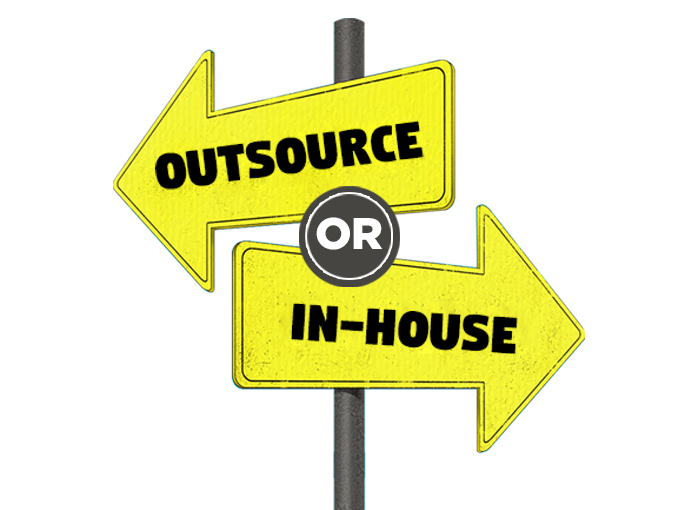
Which Is Better Than Outsourcing Dental Billing Services Or In-house Billing?
Published on:
Mar 22, 2021

Which Is Better Than Outsourcing Dental Billing Services Or In-house Billing?

Choosing between outsource vs in house dental billing is one of the biggest operational decisions a dental practice makes, since it affects reimbursement speed, staffing costs, and how much time the team spends on patient care.

Dental billing involves payment systems, insurance policies, claims settlement, and constant follow up, and when it is not managed well, it puts pressure on both revenue and operations. Many practices now turn to dental billing smart solutions or tools like dental billing software to reduce manual errors, regardless of whether billing stays in house or gets outsourced.

This guide breaks down the real pros and cons on both sides of outsource vs in house dental billing so you can decide what fits your practice best.

TL;DR

  1. What this blog covers: This blog compares outsource vs in house dental billing so you can see the real pros and cons of each option.
  2. Who this is for: This guide is for dental practice owners deciding how to structure their billing and revenue cycle team.
  3. Stats: In-house billing adds ongoing costs like training and salaries, while outsourced billing is usually charged as a percentage of collections.
  4. Why trust this: This content reflects real advantages and drawbacks seen across both in-house and outsourced dental billing models.
  5. Problem this blog solves: It helps practices choose between outsource vs in house dental billing based on their size, budget, and goals.

What Are The Advantages And Disadvantages Of In-house Dental Billing?

In-house dental billing means managing the entire revenue cycle within your own practice instead of outsourcing it. When comparing outsource vs in house dental billing, a strong foundation in understanding dental insurance billing is essential for in-house teams, since even small errors in claims or coding can slow down reimbursement.

Pros:

  • The biller is available at any time of day: Issues related to payments and bills can be easily managed if billing is done in-house. Suppose if there is any billing issue, then it could be easily resolved by giving a closer look with the help of admin staff. It is more time-saving and gives quick results if done correctly.
  • Maintain the confidentiality of the patient: In-house, billing gives complete control to the dental care provider over the patient's private details. It means it is in the dentist’s hands to protect such information and protect information. Sometimes the patient does not feel confident in sharing the information, so protecting it makes the bonding between patient and dentist strong.

Cons:

  • Higher charges: Cost of training provided to staff, the technology used, salary, and other charges for the employee’s costs more to the dental care provider.
  • Delay in billing settlement: If one staff is absent or out of the office, then the productivity of the billing department gets slowed down. In such a case, the revenue cycle of the dental office gets seriously hampered.
  • Effective training and management: The office staff needs to stay up to date by providing training from time to time about the modification in technologies and software upgrades.

What Are The Advantages And Disadvantages Of Outsourced Billing Services?

Outsourced dental billing shifts the work to a specialized partner instead of keeping it inside the practice, which is often the deciding factor in the outsource vs in house dental billing decision. Partnering with a professional dental billing company helps reduce administrative burden and improve claim success rates, since the work is handled by a dedicated team instead of staff juggling multiple roles.

Outsourcing allows dental providers to focus more on patient care while experts handle billing complexities.

Working with one of the top dental billing companies ensures access to experienced professionals, updated systems, and better denial management strategies.

Pros:

  • Allows a dental care provider to focus more on patients: Managing the revenue cycle is a hectic task. It required a lot of effort, knowledge and sometimes claims due are not settled for a particular reason. Outsourcing companies allow you to make a timeless bonding with your patients without taking the burden of the revenue cycle.
  • Outsourcing companies are experts: Dental billing companies have a lot of expertise in managing revenue cycles and processing claims, therefore, they are experts in managing denials and resolving them at a fast pace.
  • Fewer costs: When a dental business is starting, then there are a fewer number of annual claims, so billing charges of outsourcing billing are less costly. This would decrease the cost of salaries and give more benefits to employees. Also, there is no charge for the cost of software, hardware, and training.

Cons:

  • Changing costs: Usually the outsourcing dental billing companies charge a percentage of collection and during the active season, these costs become high and this creates difficulty in managing the monthly revenue in dental practice.
  • Hidden costs: There could be additional fees which may compromise printing charges, startup charges, and costs required to cancel membership.
  • Less attention on denials: Some billing companies use one or more software and are not that experienced in using it. This may lead to paying less attention to Denial management and A/R delays.

Why Is Outsourcing Considered The Best Option?

There is no universal answer to outsource vs in house dental billing, since the right choice depends on your practice size, budget, and long-term goals. To make the best decision, it is important to carefully choose dental billing company that aligns with your workflow, compliance needs, and growth strategy, since a well-informed choice leads to better revenue management, fewer denials, and a smoother patient experience.

When you outsource to a medical billing company you just need to give your best time in establishing relationships with patients and do not need to worry about any employee taking leaves, or internal disputes, or leaving the company.

In-house, teams require a lot of time to function, so dentists can be free from such responsibility by giving their revenue cycle's tasks to an outsourcing company, where they have experienced staff that flawlessly carry out such functions.

How Do You Decide Between Outsourcing and In-House Dental Billing?

The easiest way to decide between outsource vs in house dental billing is to look at three things: your current claim volume, how consistent your staffing has been, and how much time your front desk spends on billing versus patient care. A practice with stable staff and manageable claim volume can often handle billing in house successfully, while a practice facing frequent denials, staffing turnover, or growing claim volume usually sees faster results from outsourcing. Reviewing these factors every year, rather than deciding once and never revisiting it, helps a practice stay aligned with its current size and goals.

FAQ's

1. Can a dental practice switch from in-house to outsourced billing without disrupting active claims?

Yes, a well-planned transition typically overlaps in-house and outsourced billing briefly so active claims are tracked and closed out properly before the switch is complete.

2. Is a hybrid approach possible between outsourcing and in-house dental billing?

Yes, some practices keep front-end tasks like patient collections in house while outsourcing claims submission and denial management, which can balance control and expertise.

3. How does practice size affect the outsource vs in house dental billing decision?

Smaller practices with lower claim volume often benefit more from outsourcing since hiring a full-time in-house biller may not be cost effective, while larger practices sometimes have enough volume to justify an in-house team.

4. What billing metrics should a practice track regardless of which model it chooses?

Practices should track claim denial rates, average days in accounts receivable, and first-pass claim acceptance rates, since these numbers reveal whether billing is working well no matter who is handling it.

5. Does outsourcing dental billing mean losing visibility into the revenue cycle?

No, most outsourced billing partners provide regular reporting and dashboards, so practices can still track claims, collections, and denials even without managing the process day to day.

Related Posts

Follow Us For More!

Connect with us on our social media handles for industry insights, service updates, and tips to optimize your healthcare practice.
magnifiercrosschevron-down